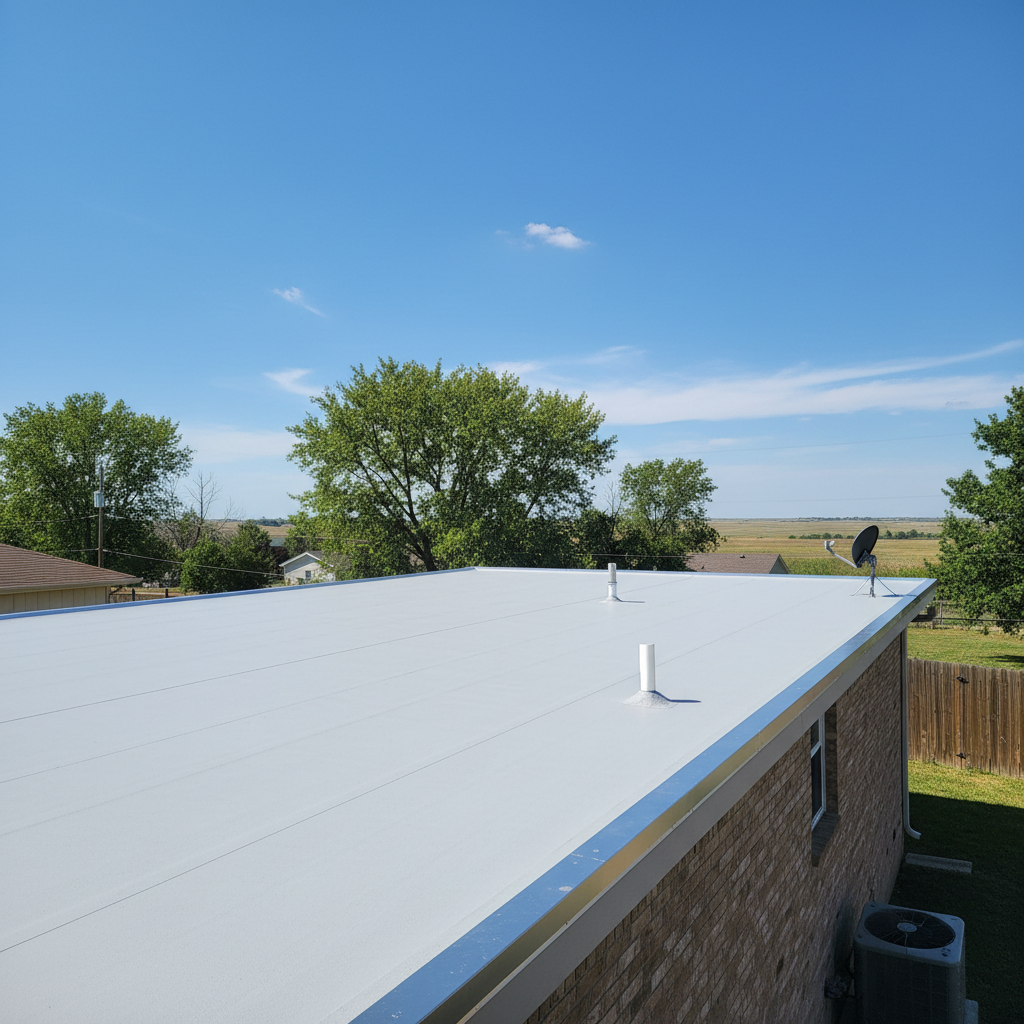
Flat roofs do not actually sit completely flat, but that slight pitch is not always enough to handle the sudden downpours and heavy spring hail we get right here in Adams County. If you have a commercial building downtown or a modern home with a low-slope roof off Burlington Avenue, you already know that water management is your biggest daily battle. When standing water decides to stick around for more than forty-eight hours after a storm, you are looking at trouble.
What Regular Maintenance Actually Looks Like
You do not need fancy tools to keep an eye on your roof, just a ladder and a bit of time twice a year—once after the winter freeze finally breaks and again right before the snow flies. Clear off leaves, twigs, and the stray cottonwood fuzz that clogs up every scupper and drain in town. If water cannot leave the roof, it finds another way down, usually straight through your ceiling insulation.
- Check all roof seams and flashing around HVAC units
- Look for blisters, cracks, or bald spots on modified bitumen or rubber membranes
- Clear out internal drains and make sure downspouts are running clear
Warning Signs You Should Not Ignore
Most flat roof failures give you plenty of warning before water starts dripping onto your desk or inventory. Inside, look for yellow water stains or bubbling paint on the top floor ceilings. Outside on the roof surface, pay attention to areas where the membrane feels spongy underfoot. That usually means the insulation underneath is soaking wet and rotting away. You might also spot granules piling up near the drains if you have a granulated cap sheet, which tells you the sun and wind are chewing up your protective layer.
Extending the Life of Your Roof
Nebraska weather throws everything at a building—freezing January winds, blistering July sun, and hail that sounds like gravel hitting the glass. Applying a fresh elastomeric coating every few years reflects UV rays and keeps the membrane flexible instead of letting it dry out and crack. Majestic Roofing Co has seen simple recoating projects add a decade to a roof that was otherwise heading for a total tear-off.
When to Call a Professional
Patching a tiny puncture with some roofing cement is fine for a quick weekend fix, but structural pooling, widespread blistering, or seam separation mean it is time to bring in backup. If you spot active leaks or structural sagging after a heavy wet snowstorm, give us a call at Majestic Roofing Co to take a look before minor water damage turns into a major structural headache.